Thursday, December 8, 2011

Place and Non-Place

Above image: Schiphol Airport, Amsterdam, Netherlands


The french anthropologist Marc Augé, coined the term non-place: a place that is considered a transient point, where people are only passing through, of little significance in route to somewhere else. Airports are a perfect example of this non-place.
As my global journeys expand, I recognize that these non-place spaces are in fact significant points of reference, a necessary catalyst. An obvious example is an airport; a vehicle enabling travel from one point to another. But a less obvious example would be non-places that act as a solice in dealing with the hardships in life. The last six days of my fathers life were spent in a small hospice in Phoenix, Arizona. I stayed with him for these last days and weathered the sadness I experienced. The blandness of Non-place, Arizona offered a needed reprise from the intensity of hospice. The sameness of Target was an emotional salve. The generically regulated familiarity of TGIFridays was reliable, I knew what to expect. These ideas don't apply when dealing with the mysterious form of death.
So I offer this up, what of the non-place? What interests lie in , around and through the non-place? I am curious how these sites impact our lives not only on a physical, literal level but on a more significant human level.


Thursday, June 16, 2011

The Cobble Stone Paths We Take


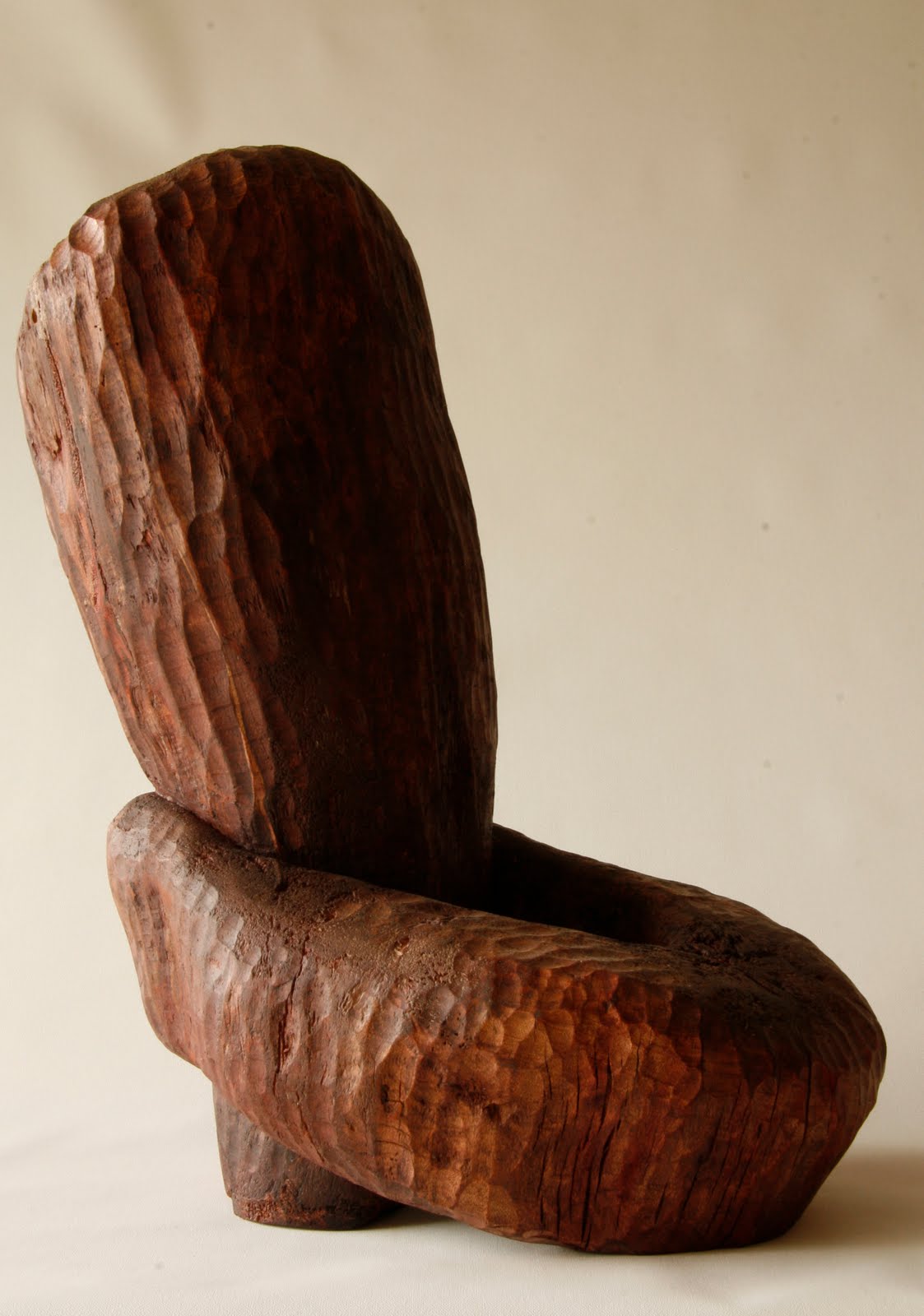
Above Image: William Palmer, Wood Sculpture


Perhaps it is due to my fathers recent death, but I have found myself feverishly tracing my steps; my history. The condensed story: my mother and father moved to Greece in 1964 and decided to settle on the small island of Hydra. Once there, they lived for several years in the home owned by playwright Roger Maybank and painter Marios Loizides. It was in this small house, that overlooked the magnificent Mediterranean sea that I was born. While Marios Loizides died in 1988, Roger Maybank relocated back to Canada and, from what I understand, continues to be a prolific writer.
Students, friends, colleagues, what is your history and more importantly how does it connect to the larger global family ? How can we draw from our history to speak both to the personal and the global?

Sunday, February 20, 2011

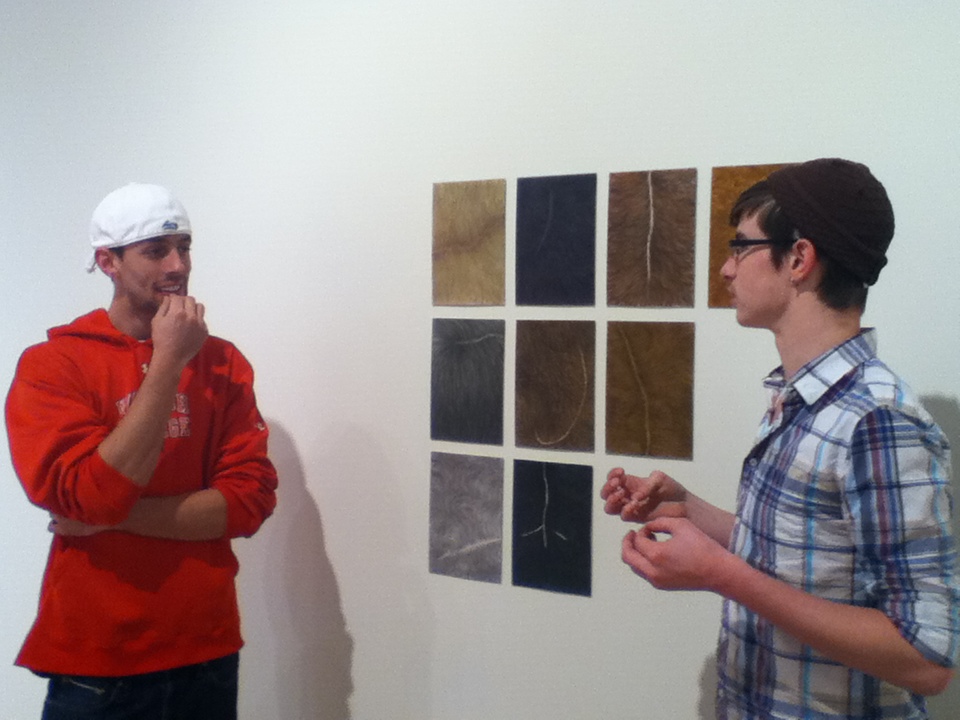
Hairballs In The House


Seeing Combs and Hairballs installed in a new arena pushes me to consider how meaning of an artwork is changed and/or influenced by space.

How do we breath " new life into our work." And can this act be linked to challenging our steady and consistent studio practice?

Image: Geoffrey Ashley, Los Angeles, California


Monday, January 24, 2011

The Beautiful Magnificent Hands of a Carver


Above image: William Palmer, artwork done within the last ten years


When my father lived in Greece, he found old wood and marble and began to carve large, abstract forms that fit together like perfectly balanced statues.Up until last summer he continued to carve wood sculptures in his make shift studio in Phoenix, AZ. When he no longer had the strength to carve, he spent most of his time in his room, surrounded by his papers, books, pencils and paints and drew the pieces he could no longer carve. Once he became too weak to work at his drafting table, he taped his drawings onto his bedpost in order to study them and find their meaning. My father now lies in his hospice bed, quiet and small but with the beautiful, magnificent hands of a carver.

My parents raised me to believe, to know, that art is not a frivolous pursuit but rather a life affirming endeavor. How does space dictate the work we create? Do our surroundings encourage or discourage growth or change within our creative pursuits? No matter where my father was, he always made, always created as if he did not have a choice, he had to create. Art was his life affirming endeavor.

Tuesday, October 12, 2010

The Seriousness of Playing


"The seriousness of playing... in the looseness of trying different things images and ideas emerge."
This comment by artist William Kentridge beautifully sums up the delicate and nuanced balance artists often need to navigate the creative life. Creating art is a serious and enjoyable endeavor and one to cultivate and move with.

Sunday, September 12, 2010

The Object and History


As an artist, I use or make objects that reference aspects of society. But what happens when the very object that is used to inform society is seen as a superficial object offering only aesthetic seduction ? What happens when a viewer is interested in the objects surface but does not see the underlying deeper meaning of it?

In what ways are we stopped or limited in our creative practices? What do we rely on within our work? How are objects freeing and/or weighted with history?

Above Images: Marilyn Levine, Brown Satchel, Ceramic, 1976 and Io Palmer, Knapsacks, Ceramic, 2010

Sunday, August 29, 2010

My Summer of Dyeing Blue


This has been the summer of dyeing blue. The dye is under my finger nails, on the counter tops and on my toes when it splashed out of the bucket. Dyeing has reconnected me to my roots as I am the product of two bohemians who left the United States in the early sixties to live a simpler life in Greece. Childhood fashions consisted of small cotton tee shirts and dresses my mother, Myra, dyed for me.

Thirty five years later, my interest in blue dye led me to research how this color has been used throughout the world. When a friend introduced me to the music of Tinariwen, a group made up of the Tuareg people of northern Africa, I became interested in the blue used to dye their traditional turbans. The dye colors aided in my inspiration and understanding of some of the ways in which blue denotes a range of social customs, and class structures.

Above images: Dying Blue, Io Palmer, 2010, image by Frans Lemmens, image by Garrondo (Tuareg man)